
Marion County Warrant Records Lookup
Marion County warrant records are held by the Sheriff's Office and the Clerk of Court in the city of Marion, which serves as the county seat. Marion County is part of the 4th Judicial Circuit in South Carolina. The county is a rural area in the Pee Dee region. All warrant records are public under state law, and you can access them in person at the courthouse or through statewide online databases. Both the Sheriff and the Clerk handle different parts of the warrant process.
Marion County Sheriff's Office and Clerk of Court
The Marion County Sheriff's Office handles all warrant service in the county. Deputies serve arrest warrants, execute search warrants, and bring people in on bench warrants issued by the courts. The Sheriff covers the entire county, including areas outside the city of Marion.
The Clerk of Court in Marion County maintains the official court files. Once a warrant leads to an arrest and formal charges, the case file goes to the Clerk. This includes the warrant, bond documents, and indictments. Staff at the Clerk's office can search for cases by name or case number. Walk-in visits are the most direct way to get copies of warrant records in Marion County.
The SLED CATCH system provides statewide criminal background checks that may include Marion County records.
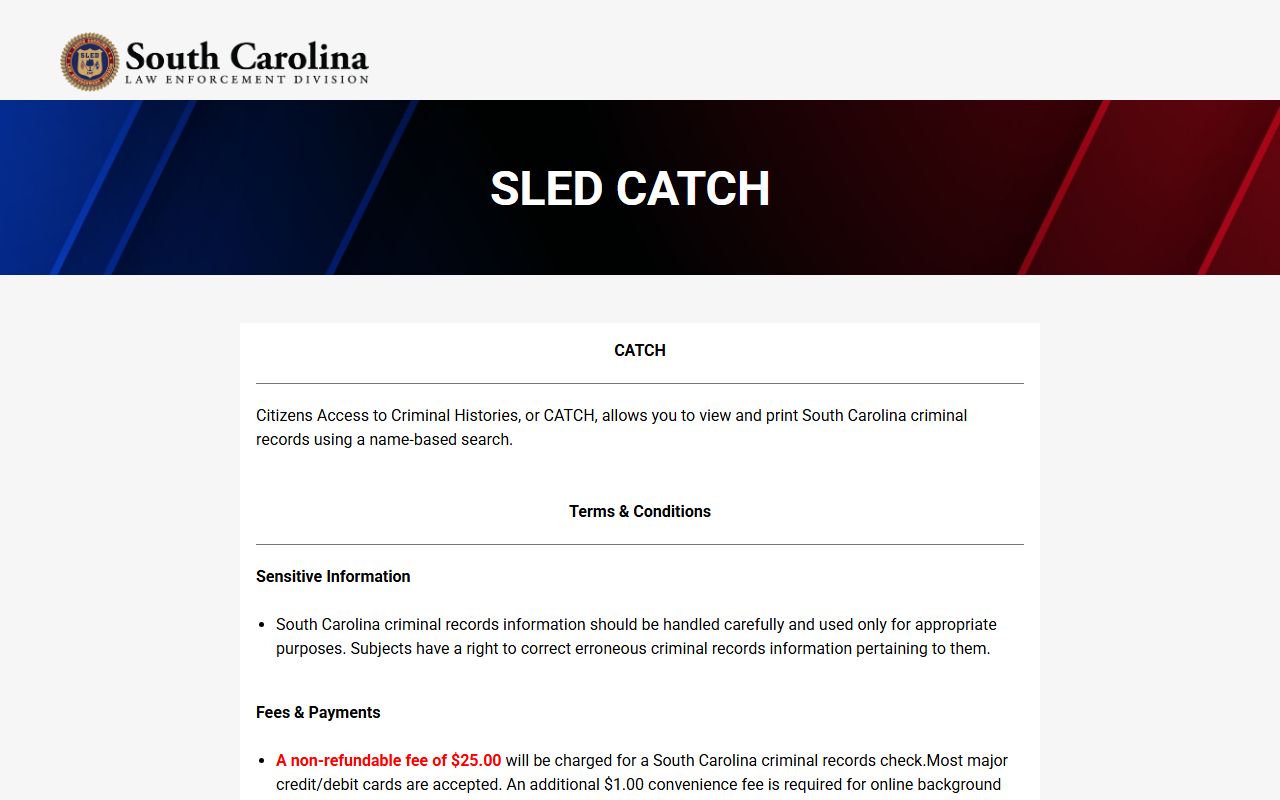
Use the SLED CATCH system to run a background check that may show active warrants from Marion County and across South Carolina.
How Warrants Are Issued in Marion County
The warrant process in Marion County follows South Carolina state law. A person or officer files a sworn complaint with a magistrate judge. The complaint describes the alleged crime and the evidence behind it. The judge reviews the facts under oath and decides whether probable cause exists. Under S.C. Code 22-3-710, the magistrate signs an arrest warrant if the evidence meets the standard.
Search warrants in Marion County require a written affidavit from a law enforcement officer. The affidavit must describe the exact location to be searched and the items officers expect to find. Under S.C. Code 17-13-140, a judge reviews the affidavit and only signs the warrant when the legal standard is satisfied. After the search is complete, the officer files a return with the court. Both the warrant and the return become part of the public record.
No arrest warrant in South Carolina expires. Under S.C. Code 17-13-40, the warrant stays active until the person is arrested or a judge recalls it. This applies to every warrant issued in Marion County. Bench warrants under 17-15-90 also remain in effect until served. A warrant from years ago can still result in an arrest during any encounter with law enforcement.
Searching Marion County Warrant Records
Statewide tools make it easier to find warrant records from Marion County. The South Carolina Courts Public Index is a free database that covers General Sessions cases in all 46 counties. You can search by name or case number. Results show basic case details like charges and court dates. This is a good starting point, but it does not display the full warrant document.
The SLED CATCH system at catch.sled.sc.gov offers paid background checks. A check may show warrants, arrests, and convictions from Marion County and the rest of the state. Results come back fast. This is useful when you need a complete criminal history view rather than details on one case.
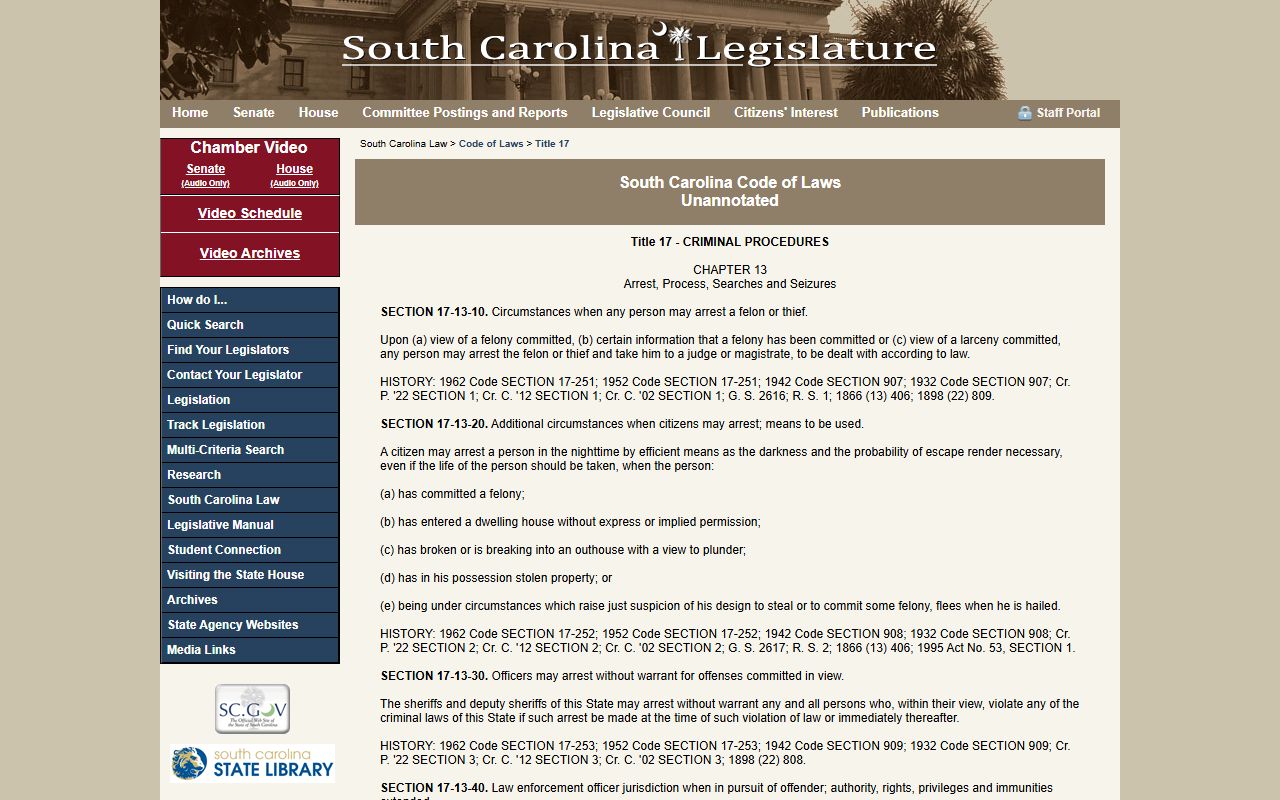
South Carolina warrant statutes are available at the SC Statehouse website and cover the rules that apply to warrants in Marion County.
For official copies of warrant records, visit the Clerk of Court in the city of Marion. Staff can make copies on the spot for most requests. You can also file a FOIA request if you prefer to handle things by mail or email.
Public Records Requests in Marion County
South Carolina's Freedom of Information Act, S.C. Code 30-4-10, gives the public access to government records including warrants. In Marion County, you can submit a FOIA request to the Sheriff's Office or the Clerk of Court. Include the person's full name, any known case numbers, and a date range to help staff find what you need.
The law sets deadlines for responses. Records from the past 24 months must be provided within 10 business days. Older records allow 20 business days. Copy fees may apply, and the office should provide an estimate before releasing records if the cost will be significant. Putting your request in writing is always a good practice because it gives you a record of what you asked for and when.
Marion County and the 4th Judicial Circuit
Marion County sits in the 4th Judicial Circuit along with Chesterfield, Darlington, Dillon, and Marlboro counties. The 4th Circuit Solicitor handles felony prosecutions that start with a warrant in Marion County. When a warrant leads to an arrest on a serious charge, the solicitor reviews the case and decides whether to present it to a grand jury.
If the grand jury returns an indictment, the case moves to trial in General Sessions Court. All documents from the process are stored at the Clerk of Court. You can track case progress through the SC Courts Public Index or by calling the Clerk's office in Marion. Magistrate-level cases are resolved locally and do not go through the circuit solicitor.
Types of Warrants in Marion County
Several types of warrants are issued in Marion County. Each serves a different role in the legal process.
- Arrest warrants let law enforcement take a person into custody for a specific charge
- Bench warrants are ordered when a person fails to show up for court
- Search warrants give officers authority to search a defined place for evidence
- Outstanding warrants are active warrants that remain unserved
Arrest warrants are the most common type in Marion County. A citizen or officer brings a complaint to a magistrate, the judge reviews the facts, and the warrant is signed under S.C. Code 22-3-710 if probable cause exists. The Sheriff then serves the warrant. All of this is documented and stored at the Clerk of Court. Bench warrants come up often in traffic and minor criminal cases when a person skips a court date.
Cities in Marion County
The city of Marion is the county seat. Mullins and Nichols are other towns in the county. All warrant records for Marion County are filed through the same court system, regardless of which town the case started in. The Clerk of Court in the city of Marion holds the official records for every case.
Nearby Counties
Marion County is in the Pee Dee region of South Carolina. Warrants are filed in the county where the alleged crime occurred. Check the location tied to the case if you are not sure which county to search.