
South Carolina Warrant Records Search
South Carolina warrant records are public documents that detail court-ordered authorizations for arrest, property search, or compelling a person to appear before a judge. These records are kept by law enforcement agencies, clerk of court offices, and the South Carolina Law Enforcement Division across all 46 counties. You can look up warrant records through state databases, county sheriff offices, and the judicial branch court system. Whether you need to check for an outstanding bench warrant or verify an active arrest warrant, several free and paid options exist for searching South Carolina warrant records from home or in person.
South Carolina Warrant Records Quick Facts
How to Search Warrant Records in South Carolina
South Carolina offers several ways to check for warrant records. The most common starting point is SLED CATCH, which stands for Citizens Access to Criminal Histories. This system lets you run a name-based criminal background check for a $25 fee. You need a last name, first name, and date of birth to use it. However, SLED CATCH does not list active wanted persons or current warrants directly. It shows prior criminal history, which may include past warrant-related charges and their outcomes.
The SLED CATCH portal is run by the South Carolina Law Enforcement Division and pulls data from the state criminal records repository established under S.C. Code Ann. Section 23-3-120. The screenshot below shows the SLED CATCH home page where you begin your search.
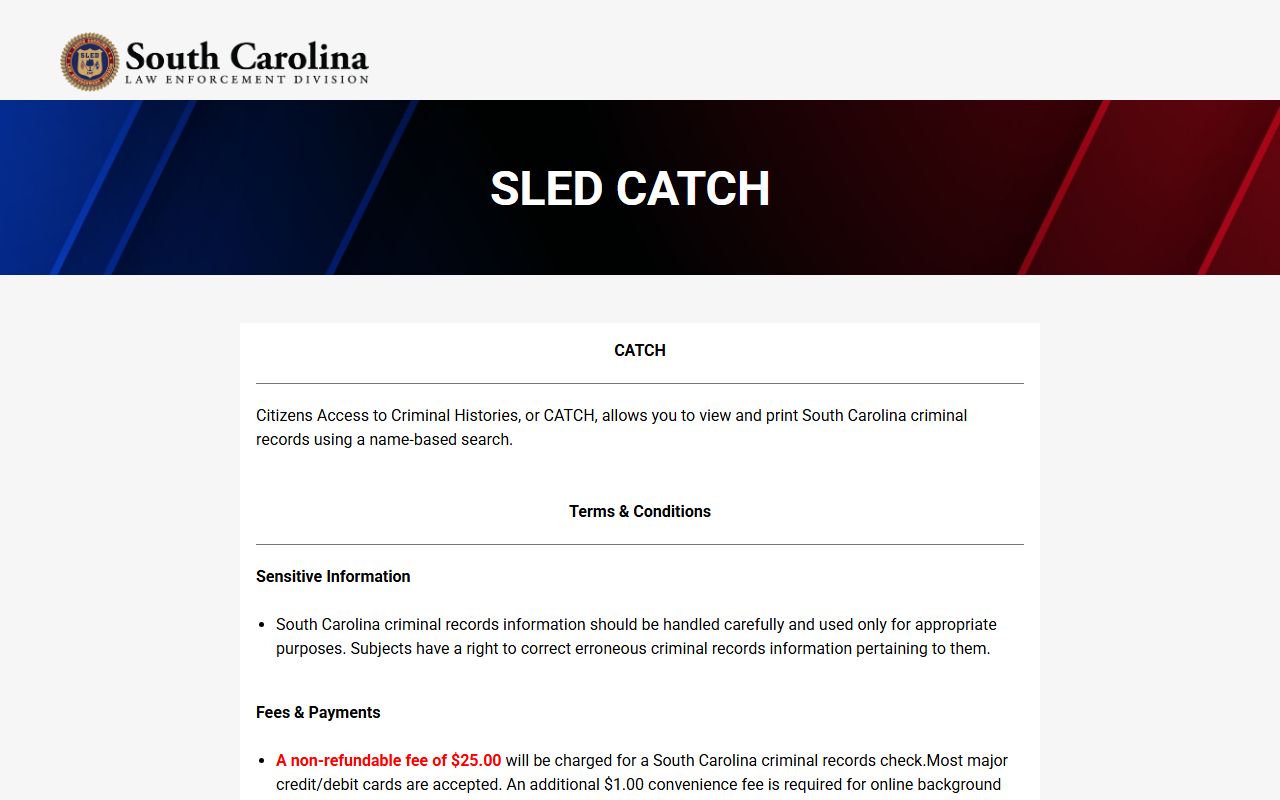
Results from SLED CATCH include arrest dates, charges, and case dispositions tied to a person's record in South Carolina. This can reveal whether someone had a warrant issued against them in the past.
For court-issued warrants, the SC Judicial Branch Case Search is a strong tool. This free Public Index system covers all 46 counties. You can search by name or case number. Bench warrants often show up as "Failure to Comply" or "Archived Bench Warrant" in the Action tab of a case record. This is the best free option to find bench warrants tied to court cases in South Carolina.
County sheriff offices are another key resource. Many sheriffs post active warrant lists on their websites or release them through press updates. You can also call or visit a sheriff office in person to ask about warrants in that county. Some offices handle warrant checks over the phone if you provide a full name and date of birth.
Note: SLED CATCH results do not confirm whether a person currently has an active warrant in South Carolina.
Types of Warrants Issued in South Carolina
South Carolina courts and law enforcement issue several types of warrants. Each serves a distinct legal purpose and follows its own set of rules under state law. Knowing the differences helps when searching warrant records across the state.
Arrest warrants are the most common type. A judge or magistrate issues an arrest warrant when there is probable cause to believe a person committed a crime. Under S.C. Code Ann. Section 22-3-710, magistrate courts can issue warrants based on sworn information under oath. The warrant names the person, describes the alleged offense, and directs law enforcement to take that person into custody. One critical fact about South Carolina arrest warrants is that they do not expire. Under S.C. Code Ann. Section 17-13-40, an arrest warrant stays active until it is served or recalled by the court. This means a warrant issued years ago can still result in an arrest today.
The South Carolina Statehouse website provides the full text of magistrate court warrant statutes, shown in the screenshot below from Title 22, Chapter 3 of the South Carolina Code.
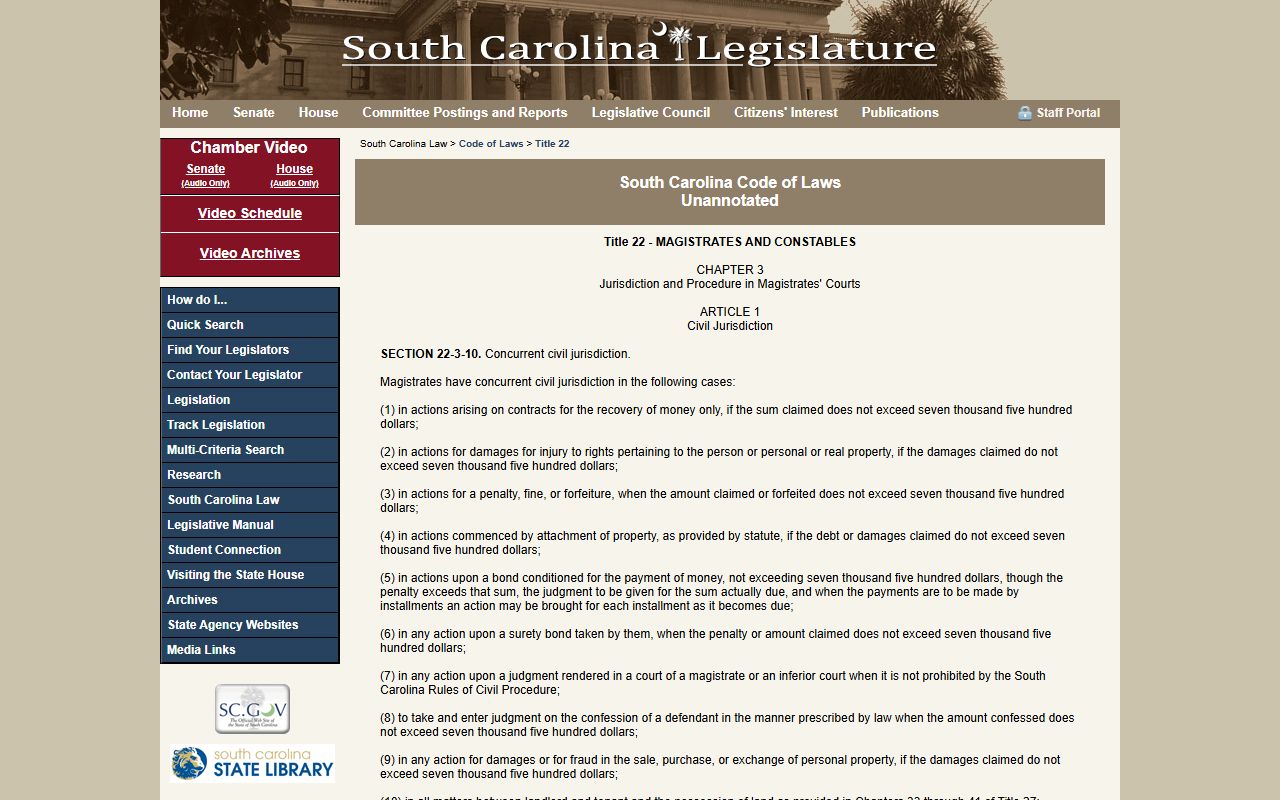
These statutes outline when and how a magistrate in South Carolina may issue a warrant for arrest based on a sworn complaint.
Bench warrants come from a judge directly. A court issues a bench warrant when someone fails to appear for a scheduled hearing or violates a court order. Under S.C. Code Ann. Section 17-15-90, failure to appear can lead to bond forfeiture and a bench warrant for the person's arrest. Bench warrants show up in the SC Judicial Branch Case Search as court actions tied to a specific case in South Carolina.
Search warrants allow law enforcement to enter and search a specific location. Under S.C. Code Ann. Section 17-13-140, a search warrant requires a sworn affidavit showing probable cause. The warrant must describe the place to be searched and the items sought. Officers have 10 days to carry out the search. After that, the warrant expires. Law enforcement must keep records of executed search warrants for three years in South Carolina.
The South Carolina Statehouse website publishes the full search warrant statutes under Title 17, Chapter 13.
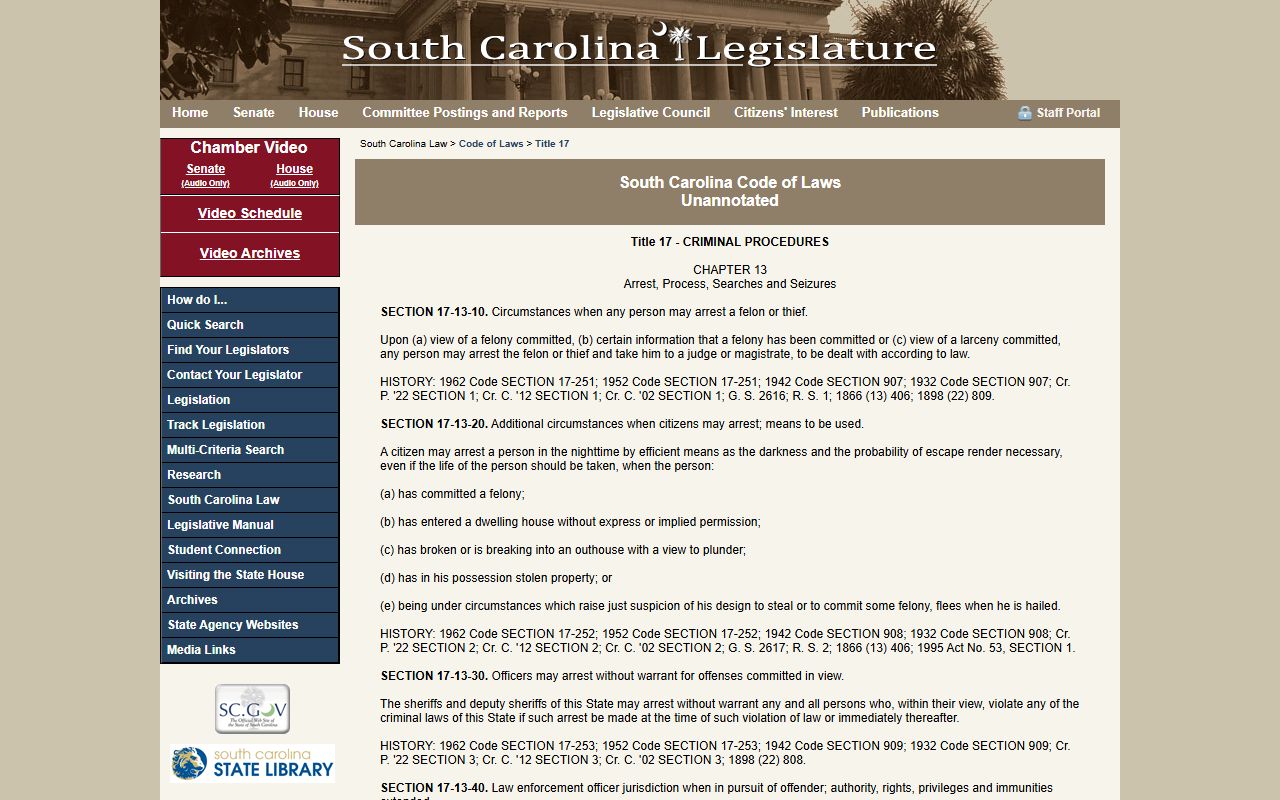
This page covers affidavit requirements, execution limits, and record-keeping rules for search warrants in South Carolina.
South Carolina Warrant Laws and Legal Requirements
State law sets clear rules for how warrants are issued and carried out in South Carolina. The arrest warrant process starts with a formal complaint. Under S.C. Code Ann. Section 17-13-160, the warrant must state the name of the accused, the offense charged, and be signed by the issuing magistrate or judge. Probable cause is the legal standard. A law enforcement officer or private citizen can swear out a warrant by filing a complaint under oath.
Fugitive warrants fall under a separate part of the law. S.C. Code Ann. Section 17-9-10 governs the arrest and extradition of people wanted in other states. When a person is arrested on a fugitive warrant in South Carolina, they can be held for up to 20 days while the requesting state arranges extradition. The person has a right to bail during this period. Fugitive warrant records are part of the court file in the county where the arrest takes place.
The screenshot below shows the extradition and fugitive warrant statutes on the South Carolina Statehouse website.
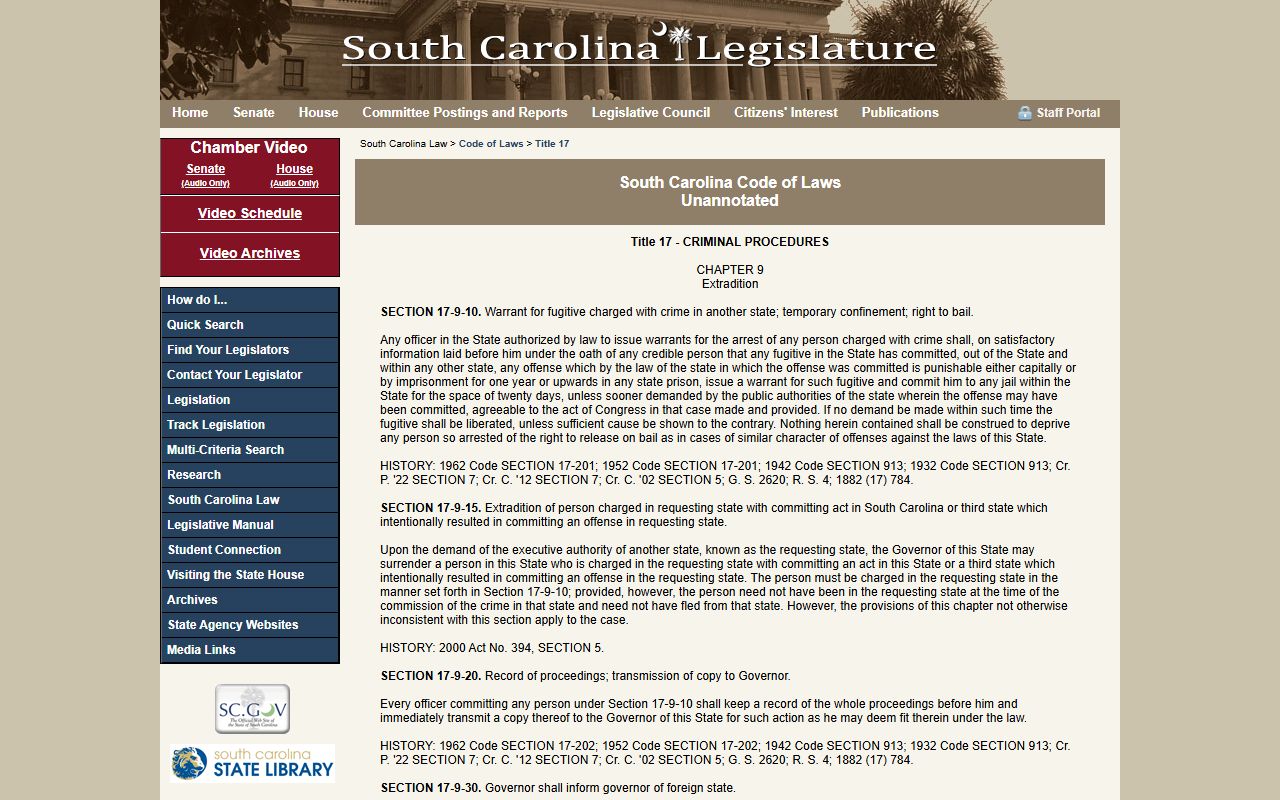
These provisions detail the process for holding and transferring individuals wanted on warrants from other states.
South Carolina also maintains a statewide criminal records repository through SLED. Under S.C. Code Ann. Section 23-3-120, all law enforcement agencies must report arrest data to SLED. This centralized system feeds the CATCH database. Warrant-related arrests become part of a person's criminal history record in the state.
Accessing Warrant Records Through FOIA in South Carolina
The South Carolina Freedom of Information Act, codified at S.C. Code Ann. Section 30-4-10, gives the public the right to inspect and copy government records. This includes warrant records held by law enforcement agencies and courts. Warrant records are public records in South Carolina, and you can request them through a formal FOIA request.
The Reporters Committee for Freedom of the Press provides a detailed guide on South Carolina open courts and public records access, including warrant records.
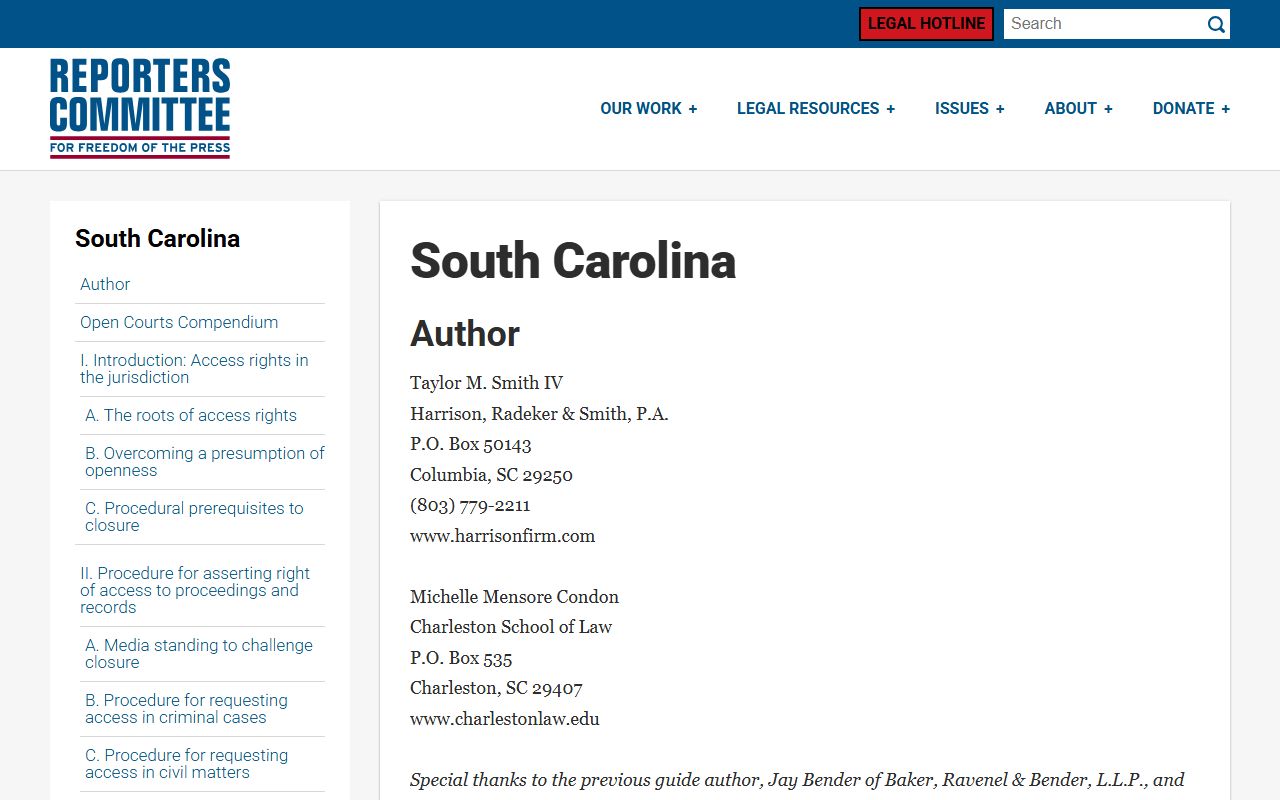
This resource explains how FOIA applies to court records, arrest records, and law enforcement files in South Carolina.
To file a FOIA request, you submit a written request to the agency that holds the records. Many agencies have their own forms. For example, the Fifth Circuit Solicitor's Office has an online FOIA request form. You may need a warrant number or other case details to help the agency locate the records. Agencies must respond within 10 business days under state law.
Below is the FOIA request form from the Fifth Circuit Solicitor's Office in South Carolina.
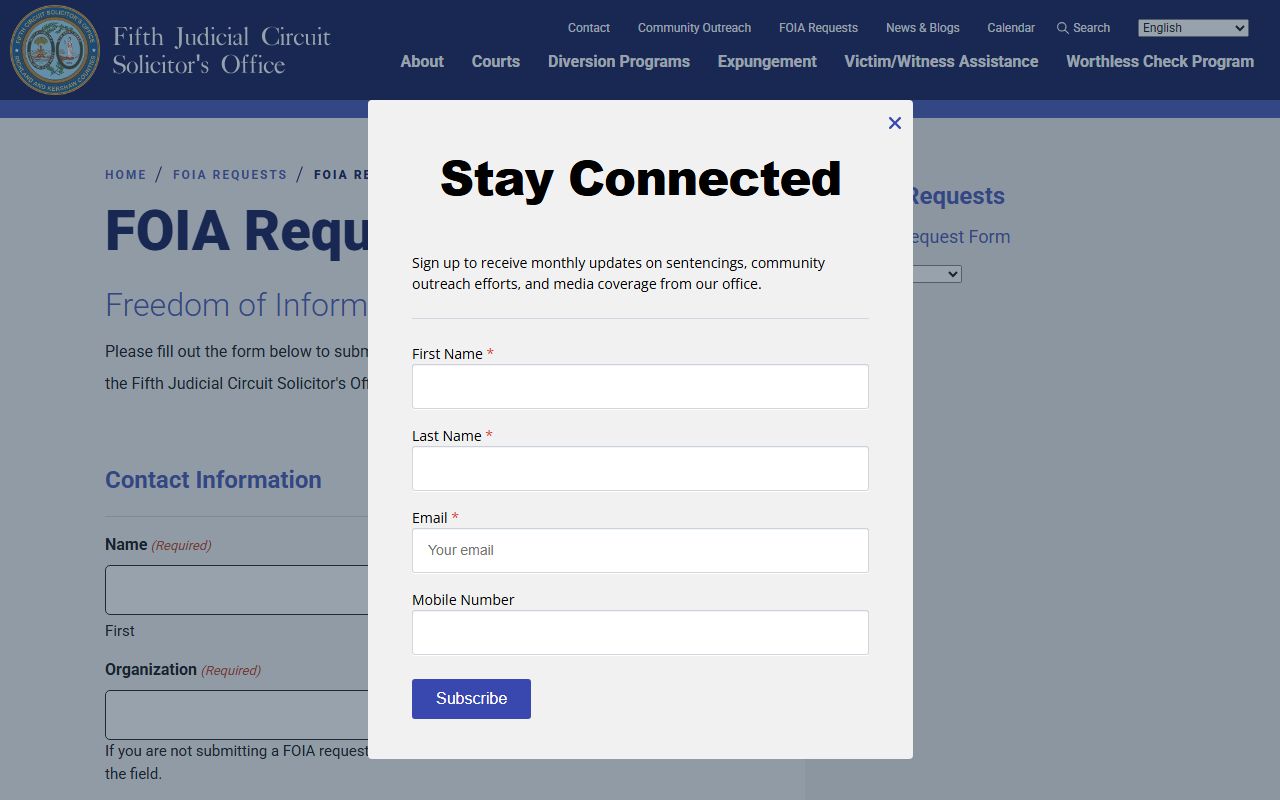
This form asks for specific details about the records you seek, including case or warrant numbers.
Local agencies have their own FOIA procedures as well. The Anderson County Sheriff's Office accepts FOIA requests and publishes its fee schedule online.
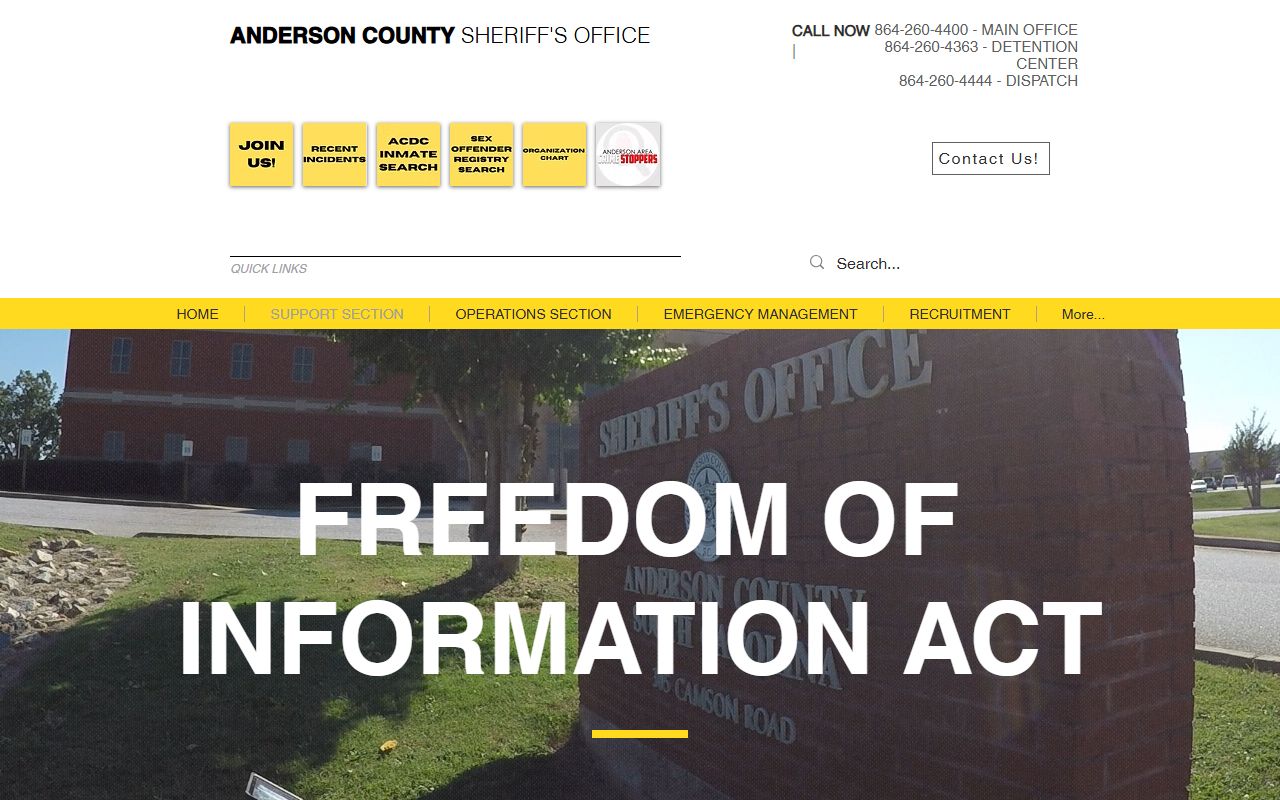
Their site lists the steps and costs for getting copies of warrant records and other law enforcement documents.
The Myrtle Beach Police Department also has a dedicated FOIA page for public records requests.
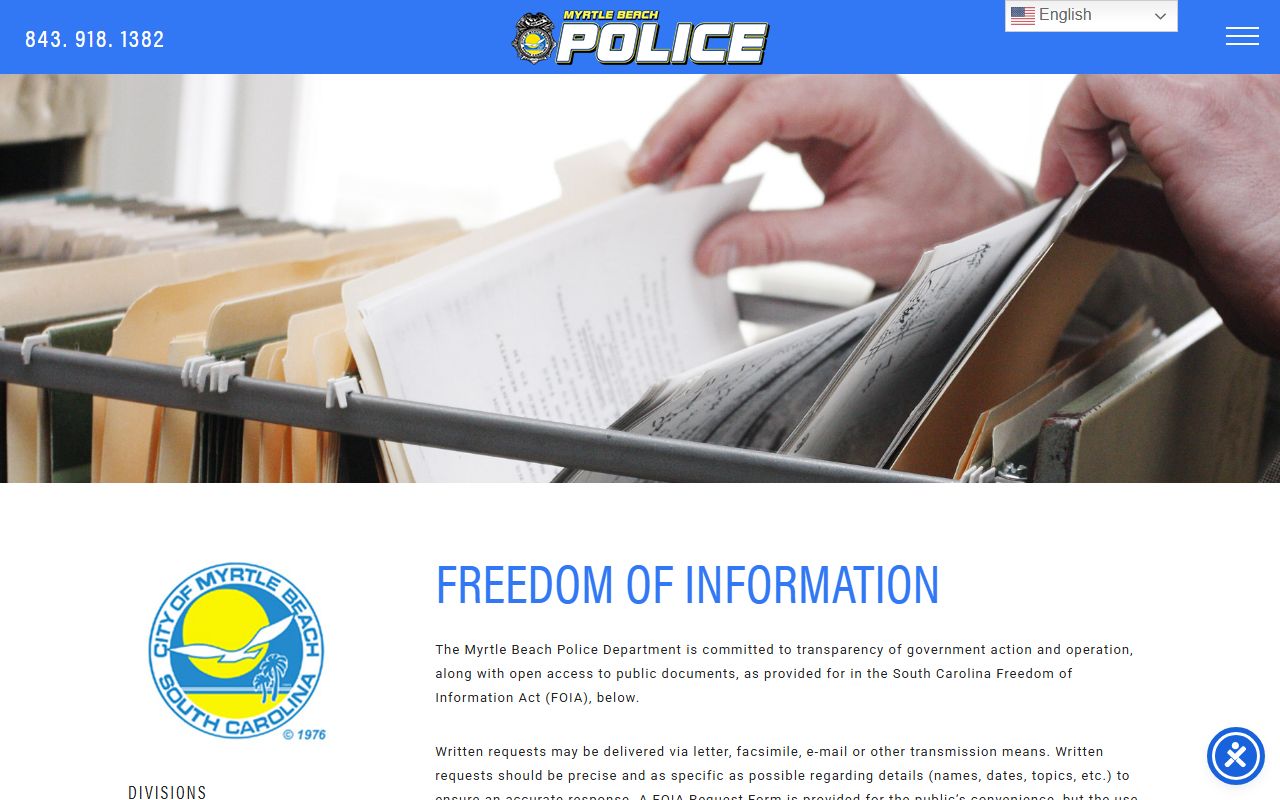
Myrtle Beach PD outlines their process for requesting warrant records and other police documents through FOIA.
Note: Some warrant records may be restricted if they involve an ongoing investigation or sealed court order in South Carolina.
What South Carolina Warrant Records Include
Warrant records in South Carolina contain key details about the authorization and its execution. The exact contents depend on the type of warrant, but most share common elements. Understanding what these records show helps you know what to expect when you request them.
An arrest warrant record typically lists the full name and description of the person named in the warrant. It states the criminal charge and the statute violated. The record shows the date the warrant was issued, the name of the issuing judge or magistrate, and the court of origin. Once served, the record also includes the date and location of the arrest, the arresting agency, and the booking information. South Carolina courts keep these records as part of the permanent case file.
Search warrant records include the sworn affidavit, the warrant itself, and the return. The return is the officer's written account of what was found during the search. Under S.C. Code Ann. Section 17-13-140, these records must be preserved for at least three years. They list the address searched, the items seized, the officer who carried out the search, and the date of execution. Search warrant records are part of the court's files in South Carolina.
The SC C-Track Public Access system provides online access to appellate court records, including cases from the Supreme Court and Court of Appeals.
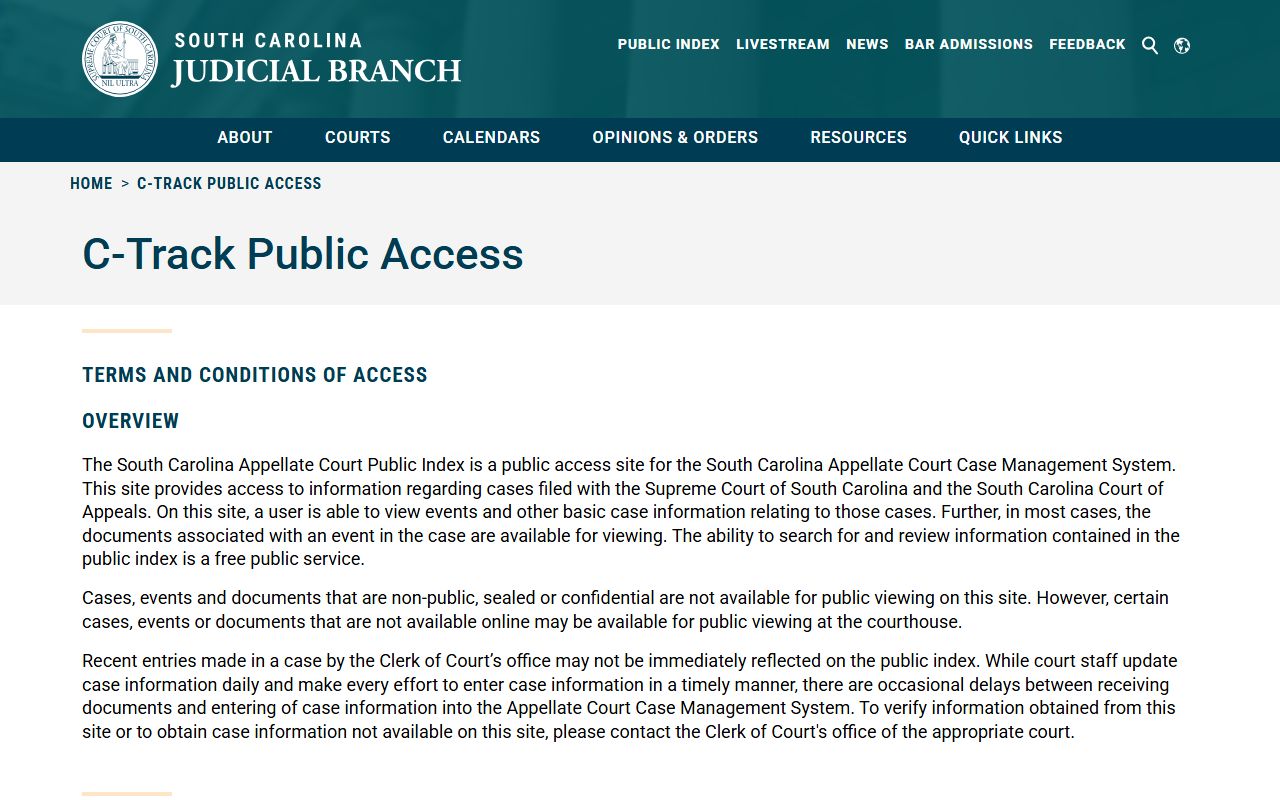
While C-Track focuses on appellate records, it can show cases that originated from warrant-based arrests in South Carolina.
Bench warrant records are tied to the underlying court case. They show the original charge, the scheduled hearing date that was missed, and the date the bench warrant was issued. Each type of warrant in South Carolina has its own specific contents and legal requirements.
The South Carolina Sex Offender Registry is a free search tool maintained by SLED that does not require a fee.
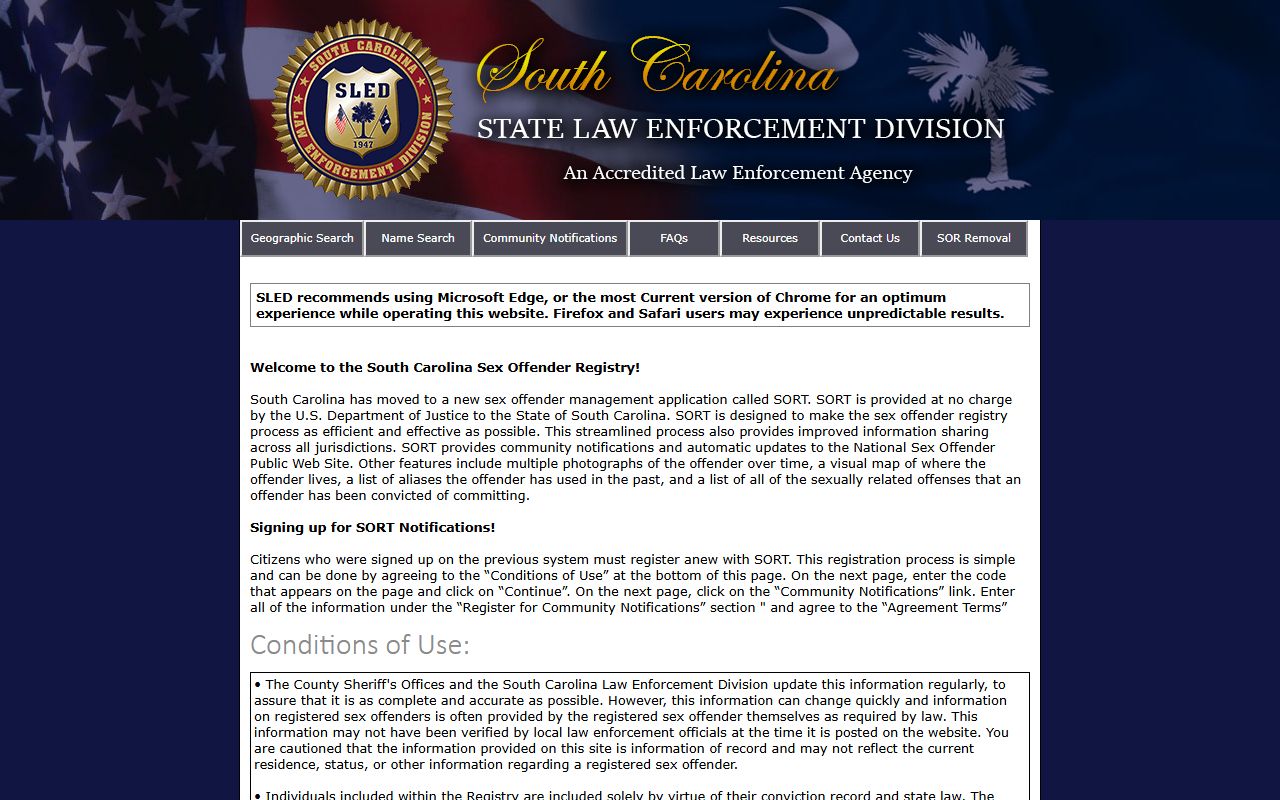
Registry records may overlap with warrant records when an offender has an active warrant for a registration violation in South Carolina.
Browse South Carolina Warrant Records by County
Each county in South Carolina has its own sheriff office and clerk of court that maintain warrant records. Pick a county below to find local resources for warrant records in that area.
Warrant Records in Major South Carolina Cities
City police departments and local courts handle warrant records at the municipal level. Pick a city below to find warrant record resources in that area of South Carolina.